
La experiencia subjetiva de cargas administrativas: ¿Nos afecta emocionalmente gastar tiempo para acceder a servicios?
The subjective experience of administrative burdens: Does it affect us emotionally to spend time accessing services?
A experiência subjetiva dos encargos administrativos: O tempo gasto acessando serviços nos afeta emocionalmente?
Resumen (es)
El estudio de cargas administrativas ha identificado los costos que los ciudadanos pueden experimentar en sus esfuerzos por obtener acceso real a servicios públicos y beneficios sociales. Sin embargo, se sabe menos sobre cómo la experiencia de cargas administrativas afecta emocionalmente a las personas. Se presenta el análisis de datos originales de una encuesta mexicana sobre si 1) el tiempo gastado en tareas administrativas o 2) la situación de vulnerabilidad de personas explica la variación en emociones positivas o negativas sobre hacer tareas administrativas. Solamente se encuentra una relación estadísticamente significativa para ciertos indicadores de vulnerabilidad. Se propone como posible explicación qué experiencias burocráticas negativas en el contexto mexicano confirman bajas expectativas previas hacia las burocracias y, por lo tanto, ya no tengan un impacto en la satisfacción emocional de los ciudadanos. Los hallazgos sugieren una actitud aprendida de reiteradas insatisfacciones de ciudadanos en sus interacciones con el Estado.
Resumen (en)
The study of administrative burdens has identified the costs that citizens may experience in their efforts to gain real access to public services and social benefits. However, less is known about how the experience of administrative burdens affects people emotionally. We present the analysis of original data from a Mexican survey on whether 1) the time spent on administrative tasks or 2) the situation of vulnerability of people explains the variation in positive or negative emotions about doing administrative tasks. Only a statistically significant relationship is found for certain vulnerability indicators. It is proposed as a possible explanation that negative bureaucratic experiences in the Mexican context confirm previous low expectations towards bureaucracies and, therefore, no longer have an impact on the emotional satisfaction of citizens. The findings suggest an attitude learned from repeated dissatisfactions of citizens in their interactions with the State.
Resumen (pt_BR)
O estudo dos encargos administrativos identificou os custos que os cidadãos podem enfrentar nos seus esforços para obter um acesso real aos serviços públicos e aos benefícios sociais. No entanto, sabe-se menos sobre como a experiência de encargos administrativos afeta emocionalmente as pessoas. Apresentamos a análise de dados originais de uma pesquisa mexicana sobre se 1) o tempo gasto em tarefas administrativas ou 2) a situação de vulnerabilidade das pessoas explica a variação de emoções positivas ou negativas sobre a realização de tarefas administrativas. Apenas uma relação estatisticamente significativa é encontrada para certos indicadores de vulnerabilidade. Propõe-se como possível explicação que as experiências burocráticas negativas no contexto mexicano confirmam as baixas expectativas anteriores em relação às burocracias e, portanto, não têm mais impacto na satisfação emocional dos cidadãos. Os resultados sugerem uma atitude aprendida com as repetidas insatisfações dos cidadãos em suas interações com o Estado.
Referencias
Aguinis, H., Gottfredson, R. K., & Joo, H. (2013). Best-Practice Recommendations for Defining, Identifying, and Handling Outliers. Organizational Research Methods, 16(2), 270-301. https://doi.org/10.1177/1094428112470848 DOI: https://doi.org/10.1177/1094428112470848
Ali, S. A. M., & Altaf, S. W. (2021). Citizen trust, administrative capacity and administrative burden in Pakistan’s immunization program. Journal of Behavioral Public Administration, 4(1). https://doi.org/10.30636/jbpa.41.184 DOI: https://doi.org/10.30636/jbpa.41.184
Baekgaard, M., & Madsen, J. K. (2024). Anticipated administrative burdens: How proximity to upcoming compulsory meetings affect welfare recipients' experiences of administrative burden. Public Administration, 102(2), 425-443. https://doi.org/10.1111/padm.12928 DOI: https://doi.org/10.1111/padm.12928
Baekgaard, M., Martin, L., & Petersen, N.B. (2025). Experiences of administrative burden in context: Exploring differences across countries, policy domains, and socio-demography. Public Administration. https://doi.org/10.1111/padm.70019 DOI: https://doi.org/10.1111/padm.70019
Baekgaard, M., & Serritzlew, S. (2016). Interpreting performance information: Motivated reasoning or unbiased comprehension. Public Administration Review, 76(1), 73-82. https://doi.org/10.1111/puar.12406 DOI: https://doi.org/10.1111/puar.12406
Barnes, C. Y. (2021). ‘It takes a while to get used to’: The costs of redeeming public benefits. Journal of Public Administration Research and Theory, 31(2), 295-310. https://doi.org/10.1093/jopart/muaa042 DOI: https://doi.org/10.1093/jopart/muaa042
Bell, E., Ter-Mkrtchyan, A., Wehde, W., & Smith, K. (2021). Just or Unjust? How Ideological Beliefs Shape Street-Level Bureaucrats’ Perceptions of Administrative Burden. Public Administration Review, 81(4), 610-624. https://doi.org/10.1111/puar.13311 DOI: https://doi.org/10.1111/puar.13311
Bell, E., Wright, J. E., & Oh, J. (2024). Does Administrative Burden Create Racialized Policy Feedback? How Losing Access to Public Benefits Impacts Beliefs About Government. Journal of Public Administration Research and Theory, 34(3), 432-447. https://doi.org/10.1093/jopart/muae004 DOI: https://doi.org/10.1093/jopart/muae004
Bhuiyan, S. A., & Baniamin, H. M. (2023). Who puts the thorn in the citizen’s flesh? Sources underlying administrative burden in a developing country. Asia Pacific Journal of Public Administration, 45(4), 345-361. https://doi.org/10.1080/23276665.2023.2183873 DOI: https://doi.org/10.1080/23276665.2023.2183873
Bozeman, B. (1993). A theory of government “red tape”. Journal of public administration research and theory, 3(3), 273-304. https://doi.org/10.1093/oxfordjournals.jpart.a037171 DOI: https://doi.org/10.1093/oxfordjournals.jpart.a037171
Brinks, D. M., Levitsky, S., & Murillo, M. V. (Eds.). (2020). The politics of institutional weakness in Latin America. Cambridge University Press. DOI: https://doi.org/10.1017/9781108776608
Brodkin, E. Z., & Majmundar, M. (2010). Administrative exclusion: Organizations and the hidden costs of welfare claiming. Journal of public administration research and theory, 20(4), 827-848. https://doi.org/10.1093/jopart/mup046 DOI: https://doi.org/10.1093/jopart/mup046
Burden, B. C., Canon, D. T., Mayer, K. R., & Moynihan, D. P. (2012). The effect of administrative burden on bureaucratic perception of policies: Evidence from election administration. Public Administration Review, 72(5), 741-751. https://doi.org/10.1111/j.1540-6210.2012.02600.x DOI: https://doi.org/10.1111/j.1540-6210.2012.02600.x
Carrigan, C., Pandey, S. K., & Van Ryzin, G. G. (2020). Pursuing Consilience: Using Behavioral Public Administration to Connect Research on Bureaucratic Red Tape, Administrative Burden, and Regulation. Public Administration Review, 80, 46-52. https://doi.org/10.1111/puar.13143 DOI: https://doi.org/10.1111/puar.13143
Christensen, J., Aarøe, L., Baekgaard, M., Herd, P., & Moynihan, D. P. (2020). Human capital and administrative burden: The role of cognitive resources in citizen‐state interactions. Public Administration Review, 80(1), 127-136. https://doi.org/10.1111/puar.13134 DOI: https://doi.org/10.1111/puar.13134
Chudnovsky, M., & Peeters, R. (2021). The unequal distribution of administrative burden: A framework and an illustrative case study for understanding variation in people's experience of burdens. Social Policy & Administration, 55(4), 527-542. https://doi.org/10.1111/spol.12639 DOI: https://doi.org/10.1111/spol.12639
Chudnovsky, M., & Peeters, R. (2022). A cascade of exclusion: Administrative burdens and access to citizenship in the case of Argentina’s National Identity Document. International Review of Administrative Sciences, 88(4), 1068-1085. https://doi.org/10.1177/002085232098454 DOI: https://doi.org/10.1177/0020852320984541
Eiró, F., & Lotta, G. (2024). On the frontline of global inequalities: A decolonial approach to the study of street-level bureaucracies. Journal of Public Administration Research and Theory, 34(1), 67-79. https://doi.org/10.1093/jopart/muad019 DOI: https://doi.org/10.1093/jopart/muad019
Halling, A., & Baekgaard, M. (2024). Administrative burden in citizen–state interactions: A systematic literature review. Journal of Public Administration Research and Theory, 34(2), 180-195. https://doi.org/10.1093/jopart/muad023 DOI: https://doi.org/10.1093/jopart/muad023
Heinrich, C. J. (2016). The Bite of Administrative Burden: A Theoretical and Empirical Investigation. Journal of Public Administration Research and Theory, 26(3), 403-420. https://doi.org/10.1093/jopart/muv034 DOI: https://doi.org/10.1093/jopart/muv034
Heinrich, C. J. (2018). Presidential Address: ‘A Thousand Petty Fortresses’: Administrative Burden in U.S. Immigration Policies and its Consequences. Journal of Policy Analysis and Management, 37(2), 211-239. https://doi.org/10.1002/pam.22046 DOI: https://doi.org/10.1002/pam.22046
Herd, P., & Moynihan, D. P. (2018). Administrative Burden: Policymaking by Other Means. Russell Sage Foundation. DOI: https://doi.org/10.7758/9781610448789
James, O. (2009). Evaluating the Expectations Disconfirmation and Expectations Anchoring Approaches to Citizen Satisfaction with Local Public Services. Journal of Public Administration Research and Theory, 19(1), 107-123. https://doi.org/10.1093/jopart/mum034 DOI: https://doi.org/10.1093/jopart/mum034
Ključnikov, A., & Sobeková Majková, M. (2016). Impact of Gender in the Perception of Administrative Burdens among Young Entrepreneurs - Evidence from Slovakia. Journal of Competitiveness, 8(2), 17-30. DOI: https://doi.org/10.7441/joc.2016.02.02
Kumlin, S. (2004). The personal and the political: How personal welfare state experiences affect political trust and ideology. Palgrave Macmillan. https://doi.org/10.1057/9781403980274_1 DOI: https://doi.org/10.1057/9781403980274
Kyle, M. A., & Frakt, A. B. (2021). Patient administrative burden in the US health care system. Health Services Research, 56(5), 755-765. https://doi.org/10.1111/1475-6773.13861 DOI: https://doi.org/10.1111/1475-6773.13861
Luhmann, M., & Intelisano, S. (2018). Hedonic adaptation and the set point for subjective well-being. En E. Diener, S. Oishi, & L. Tay (Eds.), Handbook of well-being (pp. 1-27). DEF Publishers.
Martin, L., Delaney, L., & Doyle, O. (2023). Everyday Administrative Burdens and Inequality. Public Administration Review, 84(4), 660-673. https://doi.org/10.1111/puar.13709 DOI: https://doi.org/10.1111/puar.13709
Masood, A., & Nisar, M. A. (2020). Crushed between two stones: Competing institutional logics in the implementation of maternity leave policies in Pakistan. Gender, Work & Organization, 27, 1103-1126. https://doi.org/10.1111/gwao.12448 DOI: https://doi.org/10.1111/gwao.12448
Masood, A., & Nisar, M. A. (2021). Administrative capital and citizens’ responses to administrative burden. Journal of Public Administration Research and Theory, 31(1), 56-72. https://doi.org/10.1093/jopart/muaa031 DOI: https://doi.org/10.1093/jopart/muaa031
Morgeson, F. V. (2013). Expectations, Disconfirmation, and Citizen Satisfaction with the US Federal Government: Testing and Expanding the Model. Journal of Public Administration Research and Theory, 23(2), 289-305. https://doi.org/10.1093/jopart/mus012 DOI: https://doi.org/10.1093/jopart/mus012
Moynihan, D., Gerzina, J., & Herd, P. (2022). Kafka’s Bureaucracy: Immigration Administrative Burdens in the Trump Era. Perspectives on Public Management and Governance, 5(1), 22-35. https://doi.org/10.1093/ppmgov/gvab025 DOI: https://doi.org/10.1093/ppmgov/gvab025
Moynihan, D., & Herd, P. (2020). Cargas administrativas: Los cotos que el Estado impone a los ciudadanos. En R. Peeters & F. Nieto Morales (eds.), La máquina de la desigualdad: Una exploración de los costos y las causas de las burocracias de baja confianza (pp. 31-53). CIDE; El Colegio de México.
Moynihan, D., Herd, P., & Harvey, H. (2015). Administrative burden: Learning, psychological, and compliance costs in citizen-state interactions. Journal of Public Administration Research and Theory, 25(1), 43-69. https://doi.org/10.1093/jopart/muu009 DOI: https://doi.org/10.1093/jopart/muu009
Moynihan, D. P., Herd, P., & Rigby, E. (2016). Policymaking by Other Means: Do States Use Administrative Barriers to Limit Access to Medicaid. Administration & Society, 48(4), 497-524. https://doi.org/10.1177/0095399713503540 DOI: https://doi.org/10.1177/0095399713503540
Moynihan, D. P., & Soss, J. (2014). Policy feedback and the politics of administration. Public administration review, 74(3), 320-332. https://doi.org/10.1111/puar.12200 DOI: https://doi.org/10.1111/puar.12200
Mullainathan, S., & Shafir, E. (2013). Scarcity: Why having too little means so much. Henry Holt.
Nisar, M. A. (2018). Children of a lesser god: Administrative burden and social equity in citizen–state interactions. Journal of Public Administration Research and Theory, 28(1), 104-119. doi:10.1093/jopart/mux025 DOI: https://doi.org/10.1093/jopart/mux025
Peake, G., & Forsyth, M. (2022). Street‐level bureaucrats in a relational state: The case of Bougainville. Public Administration and Development, 42(1), 12-21. https://doi.org/10.1002/pad.1911 DOI: https://doi.org/10.1002/pad.1911
Peeters, R. (2020). The Political Economy of Administrative Burdens: A Theoretical Framework for Analyzing the Organizational Origins of Administrative Burdens. Administration & Society, 52(4), 566-592. https://doi.org/10.1177/0095399719854367 DOI: https://doi.org/10.1177/0095399719854367
Peeters, R., & Campos, S. A. (2021). Taking the bite out of administrative burdens: How beneficiaries of a Mexican social program ease administrative burdens in street‐level interactions. Governance, 34(4), 1001-1018. https://doi.org/10.1111/gove.12534 DOI: https://doi.org/10.1111/gove.12534
Peeters, R., & Nieto Morales, F. (2020). La máquina de la desigualdad: Una exploración de los costos y las causas de las burocracias de baja confianza. CIDE; Colegio de México.
Peeters, R., Rentería, C., & Cejudo, G. M. (2023). How information capacity shapes policy implementation: A comparison of administrative burdens in COVID-19 vaccination programs in the United States, Mexico, and the Netherlands. Government Information Quarterly, 40(4), 101871. https://doi.org/10.1016/j.giq.2023.101871 DOI: https://doi.org/10.1016/j.giq.2023.101871
Perelmiter, L. (2022). “Fairness” in an unequal society: Welfare workers, labor inspectors and the embedded moralities of street‐level bureaucracy in Argentina. Public Administration and Development, 42(1), 85-94. https://doi.org/10.1002/pad.1954 DOI: https://doi.org/10.1002/pad.1954
Poister, T. H., & Thomas, J. C. (2011). The effect of expectations and expectancy confirmation/disconfirmation on motorists’ satisfaction with state highways. Journal of Public Administration Research and Theory, 21(4), 601-617. https://doi.org/10.1093/jopart/mur004 DOI: https://doi.org/10.1093/jopart/mur004
Ray, V., Herd, P., & Moynihan, D. (2023). Racialized Burdens: Applying Racialized Organization Theory to the Administrative State, Journal of Public Administration Research and Theory, 33(1), 139-152. https://doi.org/10.1093/jopart/muac001 DOI: https://doi.org/10.1093/jopart/muac001
Robben, L. L., Peeters, R., & Widlak, A. (2024). Burdens on the gateway to the state: Administrative burdens in the registration of people experiencing homelessness in Belgium and the Netherlands. Journal of Policy Analysis and Management, 43(3), 780-803. https://doi.org/10.1002/pam.22598 DOI: https://doi.org/10.1002/pam.22598
Robles, M., Rubio, M., & Stampini, M. (2015). ¿Las transferencias monetarias han sido capaces de llegar a los pobres en América Latina y el Caribe? Resumen de Políticas del BID, no. 246. BID.
Soss, J., & Schram, S. F. (2007). A public transformed? Welfare reform as policy feedback. American political science review, 101(1), 111-127. https://doi.org/10.1017/S0003055407070049 DOI: https://doi.org/10.1017/S0003055407070049
Suls, J., & Wheeler, L. (2012). Social comparison theory. En P. A. M. van Lange, A. W. Kruglanski & E. T. Higgins, Handbook of Theories of Social Psychology (vol. 1, pp. 460-482). Sage. DOI: https://doi.org/10.4135/9781446249215.n23
Van Ryzin, G. G. (2007). Pieces of a puzzle: Linking government performance, citizen satisfaction, and trust. Public Performance & Management Review, 30(4), 521-535. https://doi.org/10.2753/PMR1530-9576300403 DOI: https://doi.org/10.2753/PMR1530-9576300403
Yates, S., Carey, G., Malbon, E., & Hargrave, J. (2022). ‘Faceless Monster, Secret Society’: Women’s Experiences Navigating the Administrative Burden of Australia’s National Disability Insurance Scheme. Health & Social Care in the Community, 30, e2308–e2317. DOI: https://doi.org/10.1111/hsc.13669
Cómo citar
Resumen
El estudio de cargas administrativas ha identificado los costos que los ciudadanos pueden experimentar en sus esfuerzos por obtener acceso real a servicios públicos y beneficios sociales. Sin embargo, se sabe menos sobre cómo la experiencia de cargas administrativas afecta emocionalmente a las personas. Se presenta el análisis de datos originales de una encuesta mexicana sobre si 1) el tiempo gastado en tareas administrativas o 2) la situación de vulnerabilidad de personas explica la variación en emociones positivas o negativas sobre hacer tareas administrativas. Solamente se encuentra una relación estadísticamente significativa para ciertos indicadores de vulnerabilidad. Se propone como posible explicación qué experiencias burocráticas negativas en el contexto mexicano confirman bajas expectativas previas hacia las burocracias y, por lo tanto, ya no tengan un impacto en la satisfacción emocional de los ciudadanos. Los hallazgos sugieren una actitud aprendida de reiteradas insatisfacciones de ciudadanos en sus interacciones con el Estado.
Palabras clave: cargas administrativas, satisfacción, encuentros burocráticos, servicios públicos, México.Resumen, traducido
The study of administrative burdens has identified the costs that citizens may experience in their efforts to gain real access to public services and social benefits. However, less is known about how the experience of administrative burdens affects people emotionally. We present the analysis of original data from a Mexican survey on whether 1) the time spent on administrative tasks or 2) the situation of vulnerability of people explains the variation in positive or negative emotions about doing administrative tasks. Only a statistically significant relationship is found for certain vulnerability indicators. It is proposed as a possible explanation that negative bureaucratic experiences in the Mexican context confirm previous low expectations towards bureaucracies and, therefore, no longer have an impact on the emotional satisfaction of citizens. The findings suggest an attitude learned from repeated dissatisfactions of citizens in their interactions with the State.
Palabras clave: administrative burdens, satisfaction, bureaucratic encounters, public services, Mexico.Resumen, traducido
O estudo dos encargos administrativos identificou os custos que os cidadãos podem enfrentar nos seus esforços para obter um acesso real aos serviços públicos e aos benefícios sociais. No entanto, sabe-se menos sobre como a experiência de encargos administrativos afeta emocionalmente as pessoas. Apresentamos a análise de dados originais de uma pesquisa mexicana sobre se 1) o tempo gasto em tarefas administrativas ou 2) a situação de vulnerabilidade das pessoas explica a variação de emoções positivas ou negativas sobre a realização de tarefas administrativas. Apenas uma relação estatisticamente significativa é encontrada para certos indicadores de vulnerabilidade. Propõe-se como possível explicação que as experiências burocráticas negativas no contexto mexicano confirmam as baixas expectativas anteriores em relação às burocracias e, portanto, não têm mais impacto na satisfação emocional dos cidadãos. Os resultados sugerem uma atitude aprendida com as repetidas insatisfações dos cidadãos em suas interações com o Estado.
Palabras clave: encargos administrativos, satisfação, encontros burocráticos, serviços públicos, México.Introducción
Solicitar servicios y beneficios públicos a menudo implica resolver el papeleo, conocer los criterios de elegibilidad, trasladarse a oficinas de gobierno y pasar tiempo esperando en filas ahí, y lidiar con la incertidumbre de saber si navegar todos esos requisitos formales e informales realmente va a resultar en un acceso real a lo que uno formalmente tiene derecho. El estudio de las cargas administrativas ha aportado, en la última década, evidencia sistemática sobre las consecuencias de dichas barreras de acceso para los ciudadanos (Halling y Baekgaard, 2024; Heinrich, 2016; Herd y Moynihan, 2018). Los costos de interactuar con las burocracias públicas van mucho más allá de la mera incomodidad de dedicar tiempo y esfuerzos a trámites. Los estudios, principalmente realizados en los Estados Unidos y en el noroeste de Europa, han demostrado que las cargas administrativas afectan a la vida de las personas al impedir el acceso, por ejemplo, a los beneficios sociales (Barnes, 2021), el derecho al voto (Burden et al., 2012), la atención de salud (Bell et al., 2021; Moynihan et al., 2016), documentos formales de identidad (Nisar, 2018; Robben et al., 2024) y, por extensión, la participación económica y social de las personas en general (Heinrich, 2018), así como sus percepciones y actitudes hacia el gobierno (Bell et al., 2024; Moynihan y Soss, 2014; Soss y Schram, 2007). Además, las cargas administrativas afectan de manera desproporcionada a grupos de población ya vulnerables y, por lo tanto, reproducen las desigualdades sociales en lugar de proporcionar condiciones más equitativas (Chudnovsky y Peeters, 2021; Christensen et al., 2020).
La mayoría de los estudios sobre las cargas administrativas se centran en sus consecuencias objetivas y distributivas para programas o beneficios gubernamentales específicos (Martin et al., 2023). Es decir, miden el impacto de las cargas en la adopción de programas sociales y las formas en que ciertos grupos poblacionales se ven más afectados que otros. Este es un tema de gran relevancia y merece más atención académica en América Latina, donde las cargas administrativas son un aspecto particularmente prominente de los trámites gubernamentales. Este artículo se centra en una consecuencia específica de las cargas administrativas: la forma en que afecta emocionalmente realizar tareas administrativas para obtener acceso a los derechos, servicios públicos y beneficios sociales. La experiencia subjetiva de las cargas administrativas es un tema relevante por varias razones. En primer lugar, la frustración por los tiempos de espera y el papeleo, así como la incertidumbre de poder superar las barreras burocráticas, son un tipo de costos psicológicos de la interacción con el gobierno en sí mismo (Moynihan et al., 2015). En segundo lugar, las emociones que experimentan las personas al realizar tareas administrativas pueden afectar cómo se sienten las personas al interactuar con el Estado y, por extensión, son un posible indicador de la confianza en el gobierno y la satisfacción con los servicios públicos. En tercer lugar, ampliando esta línea de pensamiento, las respuestas emocionales pueden decir algo sobre lo que esperan del Estado en términos de salvaguardar el acceso real a los derechos. En otras palabras: las respuestas emocionales a los trámites son importantes porque dicen algo sobre cómo los ciudadanos experimentan el Estado y lo que esperan de este.
En este artículo se plantea la cuestión de qué emociones prevalecen entre los ciudadanos al realizar tareas administrativas y qué factores pueden explicar las variaciones en las respuestas emocionales de las personas. Se hace presentando datos de una encuesta mexicana de 2022 (n=2034) sobre la experiencia de las personas con las cargas administrativas cotidianas. Este artículo replica, a grandes rasgos, para el contexto mexicano, el análisis realizado por Martin et al. (2023) sobre los datos de encuestas del Reino Unido. De este modo, se hacen dos contribuciones distintas al estudio de las cargas administrativas. En primer lugar, se contribuye a ampliar la comprensión de las consecuencias de las cargas administrativas en términos de las emociones que puedan provocar en los ciudadanos, pues se busca entender mejor cómo esas emociones varían entre grupos de población con base en 1) el tiempo que gastan en tareas administrativas y 2) sus características socioeconómicas. En segundo lugar, se contribuye a la divulgación del marco teórico de cargas administrativas en América Latina, así como los estudios más destacados sobre este tema que en su mayoría se han realizado en contextos del Norte Global (Halling y Baekgaard, 2024, p. 6), con algunas notables excepciones de Asia (Ali y Altaf, 2021; Bhuiyan y Baniamin, 2023; Masood y Nisar, 2020; Masood y Nisar, 2021; Chudnovsky y Peeters, 2021; Chudnovsky y Peeters, 2022; Nisar, 2018; Peeters y Campos, 2021). Se sostiene que el estudio de las cargas administrativas es particularmente relevante para la región dada la disfunción burocrática ampliamente documentada, la prestación irregular de servicios públicos y las brechas en la implementación de políticas públicas (Brinks et al., 2020; Peeters y Nieto Morales, 2020; Perelmiter, 2022). Además, comprender los mecanismos y condiciones que perpetúan las profundas desigualdades sociales en América Latina es de alta importancia para el estudio de la administración pública (Eiró y Lotta, 2024).
A continuación, se analiza la literatura pertinente sobre las cargas administrativas. Esta revisión permite identificar ciertos factores que podrían influir en cómo las personas se ven afectadas emocionalmente por los trámites burocráticos. A partir de este marco conceptual se formulan dos hipótesis que orientan el análisis de este trabajo, las cuales están centradas en el tiempo que las personas dedican a tareas administrativas y en sus condiciones socioeconómicas. Estas hipótesis se desarrollarán con mayor detalle en un apartado específico para ello. Después de describir el diseño de investigación, se presentan los hallazgos de este trabajo. Finalmente, el artículo presenta un resumen final, una discusión de las limitaciones de este estudio, sugerencias para futuras investigaciones, y una reflexión final sobre las implicaciones de una posible hipótesis alternativa.
Marco teórico
Cargas administrativas y sus consecuencias
Las cargas administrativas son los costos que experimentan los ciudadanos al interactuar con el Estado (Halling y Baekgaard, 2024, p. 181; Herd y Moynihan, 2018). En este sentido, estos costos se refieren a las barreras de tiempo, esfuerzo y carga emocional que los ciudadanos enfrentan al intentar acceder a servicios, derechos o cumplir con obligaciones impuestas por el gobierno. Así pues, al adoptar explícitamente la perspectiva ciudadana sobre la implementación de políticas públicas, la literatura sobre cargas administrativas se distingue de otros enfoques de la disfunción burocrática, como el estudio de red tape (Bozeman, 1993) y de la implementación de políticas públicas, que comúnmente se estudian desde la perspectiva de los responsables políticos o del personal de primera línea (Heinrich, 2016). Normalmente, la experiencia subjetiva del ciudadano con encuentros burocráticos se operacionaliza en tres tipos de costos (Moynihan et al., 2015): de cumplimiento, de aprendizaje y psicológicos. Los costos de cumplimiento vienen en forma de tiempos de espera, papeleo y cumplimiento de otros requisitos formales de procedimientos burocráticos; los costos de aprendizaje se refieren al esfuerzo y al tiempo necesarios para comprender los criterios de admisibilidad y el funcionamiento de los procedimientos, tanto formales como informales; finalmente, los costos psicológicos incluyen el estrés de interactuar con funcionarios del gobierno, la incertidumbre de si se otorgará el acceso a un servicio o beneficio y la pérdida de autonomía experimentada por tener que cumplir con las condicionalidades de un programa gubernamental.
La literatura sobre cargas administrativas ha hecho tres grandes afirmaciones (Halling y Baekgaard, 2024). En primer lugar, las cargas son consecuenciales para el acceso real de las personas a los servicios y beneficios a los que tienen derecho formalmente, lo que puede conducir a la exclusión administrativa (Brodkin y Majmundar, 2010), a afectar negativamente a la participación económica y social de las personas (Heinrich, 2018) y a reducir la confianza de las personas en el gobierno (Bell et al., 2024; Moynihan y Soss, 2014). En segundo lugar, las cargas son distributivas: no todas las personas se ven afectadas en la misma medida por los costos que implica interactuar con el Estado. En general, es más probable que las cargas tengan un mayor impacto en quienes tienen menos capital humano y capital administrativo para navegar por las burocracias (Christensen et al., 2020; Masood y Nisar, 2021) y quienes tienen una mayor dependencia de los servicios públicos y los beneficios sociales (Chudnovsky y Peeters, 2021). En tercer lugar, las cargas administrativas pueden construirse deliberadamente. Aunque las capacidades estatales limitadas o las consecuencias no deseadas del diseño y la implementación de políticas públicas también pueden generar costos adicionales de interacción para los ciudadanos (Peeters, 2020), una idea clave en la literatura es que las cargas administrativas pueden ser una forma de política oculta (Herd y Moynihan, 2018), es decir, la imposición deliberada de barreras para complicar el acceso de las personas al Estado (Moynihan et al., 2016; Moynihan et al., 2022).
En la misma línea que Martin et al. (2023), se le da seguimiento a un tema que en la literatura se pasa por alto en gran medida: cómo afecta emocionalmente a las personas tener que dedicar tiempo y esfuerzo en hacer trámites para obtener acceso real a sus derechos, a servicios públicos y a beneficios sociales. Como se argumentó en la introducción a este artículo, las respuestas emocionales a tener que hacer tareas administrativas pueden decir algo sobre cómo los ciudadanos experimentan el Estado y lo que los ciudadanos esperan de este. El estudio de la experiencia subjetiva de las cargas administrativas es particularmente relevante para América Latina y los contextos del Sur Global en general. A pesar de las numerosas indicaciones de que los ciudadanos sufren relativamente muchas cargas administrativas en contextos de desigualdad social y de instituciones débiles que presentan brechas en la implementación de políticas públicas, en la provisión de servicios públicos, en la aplicación de normas, en la focalización de los beneficiarios de los servicios sociales y en el alcance geográfico del Estado (Masood y Nisar, 2020; Nisar, 2018; Peake y Forsyth, 2022; Peeters y Nieto Morales, 2020; Peeters et al., 2023; Perelmiter, 2022), se han realizado relativamente pocos estudios que exploran las causas y efectos de las cargas sobre los ciudadanos de esta región. Más específicamente, la complejidad de los trámites, la frustración por los largos tiempos de espera y la incertidumbre sobre si se puede acceder a lo que formalmente tiene derecho –común para los procedimientos administrativos en las ‘burocracias de baja confianza’ de México y América Latina (Peeters y Nieto Morales, 2020)– son una indicación importante de que los trámites pueden provocar fuertes respuestas emocionales sobre los trámites en sí mismos, pero también sobre el desempeño del gobierno en general.
Hipótesis
De acuerdo con estudios previos en el campo, se formulan dos hipótesis para explicar la experiencia subjetiva de las cargas administrativas. En primer lugar, seguimos el razonamiento de que los diferentes tipos de costos de interactuar con el gobierno están altamente interrelacionados (Baekgaard y Madsen, 2024). En otras palabras, es probable que la presencia de costos de cumplimiento también indique la presencia de costos psicológicos o de aprendizaje. Esto también tiene sentido intuitivo: si necesitamos dedicar más tiempo a tareas administrativas (costo de cumplimiento), es más probable que experimentemos emociones negativas como ira, frustración o impotencia (costos psicológicos). Lo objetivo (tiempo gastado) explica lo subjetivo (emociones negativas).
Una característica importante de este estudio es su énfasis en las tareas administrativas en los dominios de la vida en lugar de las cargas administrativas asociadas con políticas públicas o programas específicos. Siguiendo el estudio de Martin et al. (2023), hemos seleccionado cuatro ámbitos regulares y comunes en los que es probable que la mayoría de los ciudadanos se enfrenten a tareas administrativas: 1) impuestos, como declaraciones de renta, pago de impuestos y reclamación de deducciones fiscales; 2) beneficios gubernamentales, como investigar la elegibilidad para beneficios, presentar documentos y comunicarse con oficinas gubernamentales; 3) salud, como encontrar médicos y servicios médicos, hacer trámites y programar citas; y 4) tareas de cuidado, como la búsqueda de asistencia para personas de tercera edad o niños y la comunicación con las escuelas o los servicios de atención. Es probable que las personas experimenten emociones distintas al tener que gastar tiempo en ciertas tareas, como por ejemplo declarar impuestos genera frustración, pero no necesariamente tiene el mismo peso emocional que hacer tareas administrativas que impactan el acceso a servicios de salud o a beneficios que pueden ser necesarios para sostener familias económicamente. En consecuencia, se formula la primera hipótesis de la siguiente manera:
H1a: El tiempo gastado en tareas administrativas afecta negativamente la experiencia subjetiva de las personas.
H1b: El tiempo gastado en tareas administrativas afecta relativamente más negativamente la experiencia subjetiva de las personas en los ámbitos de beneficios, salud, y tareas de cuidado que en el ámbito de los impuestos.
También se indaga sobre el efecto de la situación socioeconómica de las personas en la experiencia subjetiva de hacer tareas administrativas. Se sabe por estudios anteriores que es probable que los grupos más desfavorecidos se enfrenten a más cargas y tengan un menor acceso a beneficios sociales (Moynihan et al., 2015). Siguiendo esta línea de razonamiento, la situación socioeconómica de las personas también puede afectar a su experiencia subjetiva de las cargas administrativas. Se sabe por estudios anteriores que el funcionamiento cognitivo de las personas es un indicador importante de experimentar más costos de cumplimiento, de aprendizaje y psicológicos (Christensen et al., 2020). En particular, la salud mental y física, los niveles educativos y la edad pueden afectar la capacidad cognitiva de las personas para navegar por los procedimientos burocráticos (Christensen et al., 2020). Además, las personas pueden experimentar cargas administrativas relativamente mayores si hay más en juego para ellas, si sus costos relativos de hacer trámites son más altos o si tienen una situación socioeconómicamente más vulnerable (Chudnovsky y Peeters, 2021). Por lo tanto, género (Kyle y Frakt, 2021; Yates et al., 2022) y los niveles de ingresos son otros ejemplos indicadores importante de cómo las personas experimentan subjetivamente las cargas en el acceso a beneficios sociales cruciales o atención médica (Mullainathan y Shafir, 2013; Robles et al., 2015). En consecuencia, la segunda hipótesis es la siguiente:
H2a: Personas en condiciones vulnerables tienen una experiencia subjetiva de cargas administrativas más negativa.
H2b: Personas en condiciones vulnerables tienen una experiencia subjetiva de cargas administrativas más negativa, sobre todo en los ámbitos de beneficios, salud, y tareas de cuidado.
Diseño de investigación
Para explorar la experiencia subjetiva de cargas administrativas la estrategia de investigación se basa en métodos cuantitativos, que permiten someter a prueba las hipótesis planteadas en la sección anterior y conocer la magnitud de estas relaciones. Se obtuvieron datos primarios, recolectados a partir de una encuesta y se analizaron utilizando el estimador de mínimos cuadrados ordinarios en cada uno de los modelos estadísticos.
Recolección de datos
La recolección de datos partió del levantamiento de una encuesta que explora las cargas administrativas relacionadas a la interacción de los ciudadanos con el gobierno en cuatro tipos de procesos administrativos: impuestos, beneficios del gobierno, atención en salud y cuidados de personas. La encuesta fue elaborada por un consorcio internacional de investigación en cargas administrativas que recolecta información sobre las experiencias de las personas con el papeleo y las tareas administrativas en la vida cotidiana, incluyendo el acceso a prestaciones gubernamentales y la administración de la atención médica.1 La encuesta se levantó entre noviembre y diciembre de 2022 en línea con base en una muestra preconstruida de personas residentes en México para aproximarse a una representatividad estadística a nivel nacional—aunque no es estadísticamente representativa. Los participantes que componen el panel preconstruido fueron invitados a participar en el estudio mediante una invitación directa por la entidad gestora de la muestra, de los que se obtuvieron 2034 respuestas completas.2 Reconocemos las características de la muestra como una limitación de nuestro estudio. La encuestadora recopiló datos con el objetivo ser representativos de la población en cuanto a sexo, edad y lugar de residencia. Esto fue principalmente para garantizar una muestra diversa en términos de factores demográficos muy básicos. Con este fin, se utilizó un procedimiento de muestreo por cuotas. La razón por la que todavía hay algunas diferencias entre la distribución general en la población y en la muestra en la demografía básica son las tasas de respuesta muy diferentes en las diferentes subpoblaciones/cuotas. Una muestra más representativa probablemente mostraría un efecto más pronunciado de ciertos factores socioeconómicos en la satisfacción emocional, dada la subrepresentación de los grupos de población vulnerables. Sin embargo, nuestro análisis ya recoge este efecto, como mostraremos en la presentación de los hallazgos. Por lo tanto, creemos que podemos presentar hallazgos suficientemente sólidos en términos de validez externa.
Variable dependiente: satisfacción emocional
Para definir la variable dependiente, se sigue el concepto de costos de bienestar de Martin et al. (2023) y el concepto de respuestas emocionales a la burocracia de Carrigan et al. (2020), que capturan una parte significativa de lo que Moynihan et al. (2015) describen como los costos psicológicos de experimentar cargas administrativas: las emociones positivas y negativas que las personas experimentan relacionadas con sus interacciones con el Estado. El concepto de satisfacción emocional se mide mediante la variable afecto neto, que representa una cuantificación de las expresiones de sentimiento de las personas, negativas y positivas, para describir su experiencia al realizar un trámite. Para evaluar el afecto neto, la encuesta pide a los encuestados evaluar sus sentimientos después de la realización del trámite en los siguientes seis rubros: alegría, confianza y sentido de propósito, frustración, vergüenza, estrés y preocupación.3 De tal manera, que la variable promedia la magnitud de las emociones positivas y negativas, siendo -6 el valor máximo para una experiencia completamente negativa, +6 para una experiencia completamente positiva y 0 para una experiencia neutral.
Variable independiente I: tiempo
La variable independiente son las cargas administrativas objetivas que las personas experimentan al realizar trámites en gobierno, que se refiere al tiempo que una persona dedica a trámites administrativos. Se operacionalizó esta variable utilizando la pregunta “En este último mes (últimos 30 días), ¿cuántas veces realizó cada tarea y cuánto tiempo dedicó a cada tarea?”, que se aplicó a los entrevistados en cuatro dimensiones: servicios de salud, obtención de beneficios, trámites para cuidados y trámites para cuestiones fiscales. Para cada uno de los rubros, la encuesta lista un conjunto de actividades asociados con el rubro4 y, además, se construyó el indicador mediante un promedio simple, que se denominó cargas administrativas y el cual mide los minutos por día dedicados a trámites y gestión burocrática.5
Posteriormente, se llevó a cabo un proceso de análisis de datos atípicos, conforme a los principios delineados por Aguinis et al. (2013), que permitió identificar datos influyentes en las estimaciones cuantitativas.6 También, se mantuvo la medición del tiempo dedicado a trámites y gestión burocrática en cada una de las cuatro dimensiones observadas por la encuesta: tiempo dedicado a cuidados de la salud, acceso a beneficios de gobierno, trámites fiscales y cuidados de otras personas.
Variable independiente II: factores socioeconómicos
Se incorporó un conjunto de variables que permiten evaluar las hipótesis relacionadas con las personas en condiciones de vulnerabilidad, que fueron las siguientes: género, adulto mayor, problemas de salud física o mental, persona sin estudios universitarios, y bajo ingreso familiar. Cada una de estas variables (en su versión binaria) permitieron identificar a las personas con alguna condición de vulnerabilidad.
Con respecto al género (femenino = 1), las cargas administrativas tienden a distribuirse de manera desigual, con mayores impactos para ciertos grupos y sobre todo para las mujeres quienes suelen estar subrepresentadas. Hay investigaciones que confirman que el género tiene un impacto estadísticamente significativo en la cantidad de tiempo dedicado a cumplir con los requisitos administrativos y burocráticos (Ključnikov y Sobeková Majková, 2016; Yates et al., 2022). Además, se señala la presencia de pruebas que indican que las cargas administrativas generan impactos diversos según la raza, la clase social y el género en lo que respecta a los programas sociales (Moynihan y Herd, 2020; Ray et al., 2023).
También, la literatura ha señalado que las cargas administrativas en personas con problemas de salud (físicas o mentales) es mayor, pues son personas con más probabilidad de requerir asistencia del gobierno, pero, al mismo tiempo, los problemas de salud minan los recursos cognitivos necesarios para gestionar las cargas administrativas asociadas con dicha asistencia. La salud se considera un elemento integral del capital humano, y su importancia radica en cómo influye en la manera en que las personas enfrentan las cargas administrativas al interactuar con el Estado (Christensen et al., 2020; Moynihan y Herd, 2020). Se observó esta condición de vulnerabilidad de dos maneras; primero, analizando al grupo de edad de adultos mayores (una persona con 65 años o más), y posteriormente a personas que reportan sufrir problemas de salud física o mental, independientemente de su edad.
Una tercera condición de vulnerabilidad es la carencia de capital humano, entendido como la educación, el dinero, las redes sociales, la inteligencia, las capacidades no cognitivas y la salud, tiene un papel crucial en la manera en que las personas enfrentan las cargas administrativas. El capital humano cobra relevancia en el contexto de barreras administrativas, que impactan de manera más pronunciada en los sectores más vulnerables de la población (Chudnovsky y Peeters, 2021). Los individuos que cuentan con diversos recursos, como el capital financiero, salud, educación, conexiones sociales, inteligencia y habilidades cognitivas, que constituyen su capital humano son más resilientes para hacer frente a las cargas administrativas (Moynihan y Herd, 2020). Estudios preliminares han mostrado que esta condición es particularmente importante en la división entre personas con y sin estudios universitarios (Martin et al., 2023).
Especificación del modelo
Para probar las hipótesis, se elaboraron diez modelos estadísticos basados en el estimador de mínimos cuadrados ordinarios —asumiendo que la relación entre satisfacción emocional y cargas administrativas es lineal.7 El Modelo 1 permite someter a prueba la Hipótesis 1a, que indica que las cargas administrativas tienen una relación negativa con la satisfacción emocional y los Modelos del 1a al 1d prueban la Hipótesis 1b, que indica que esta relación negativa tiene una mayor magnitud en los ámbitos de beneficios, salud, y tareas de cuidado que en el de impuestos. En todos los casos, además de la variable de interés, se incorporaron efectos fijos por entidad federativa ( y las siguientes variables de control: género, minoría étnica, sin estudios universitarios, trabajo de tiempo completo, hogar con bajo ingreso y hogar con hijos.
(1)El Modelo 2 permite someter a prueba la Hipótesis 2a, que indica que las personas en condiciones vulnerables tienen una experiencia subjetiva de cargas administrativas más negativa y los Modelos del 2a al 2d prueban la Hipótesis 2b, que indica que esta relación negativa es más fuerte en los ámbitos de beneficios, salud y tareas de cuidados. Para esos modelos, se incorporaron efectos fijos por entidad federativa ( y las siguientes variables de control: minoría étnica, trabajo de tiempo completo y hogar con hijos.
(2)Resultados
En la Tabla 1 se presentan las estadísticas descriptivas de las variables que se utilizaron en este estudio empírico. En la tabla, se observa que el promedio de cargas administrativas es de 26 minutos diarios en total, siendo 8,1 minutos para cargas relacionadas con trámites en salud, 8,9 para cargas en beneficios sociales, 9,6 en impuestos y 8,3 en cuidados de salud de otros. El 52 % de las personas encuestados son del género femenino, 3 % son adultos mayores y 8 % pertenecen a una minoría étnica.
Tabla 1: Estadística descriptiva
| Variable | n | Promedio | desv. est. | Min. | Max. |
|---|---|---|---|---|---|
| Satisfacción emocional | 1970 | 1,08 | 2,24 | -5,9 | 6 |
| Cargas administrativas (total) | 1838 | 26,3 | 54,8 | 0 | 858,36 |
| Cargas administrativas (salud) | 1838 | 8,1 | 22,1 | 0 | 430 |
| Cargas administrativas (beneficios) | 1838 | 8,9 | 22,5 | 0 | 282 |
| Cargas administrativas (impuestos) | 1838 | 9,6 | 24,3 | 0 | 400 |
| Cargas administrativas (cuidados) | 1838 | 8,3 | 21,1 | 0 | 460 |
| Adulto mayor | 1829 | 0,03 | 0,18 | 0 | 1 |
| Femenino | 1838 | 0,52 | 0,49 | 0 | 1 |
| Minoría étnica | 1838 | 0,08 | 0,27 | 0 | 1 |
| Universidad | 2034 | 0,55 | 0,49 | 0 | 1 |
| Empleo de tiempo completo | 2027 | 0,65 | 0,47 | 0 | 1 |
| Hijos en el hogar | 2029 | 0,16 | 0,46 | 0 | 1 |
| Ingreso bajo | 1959 | 0,16 | 0,36 | 0 | 1 |
| Salud física | 2032 | 4 | 0,73 | 1 | 5 |
| Salud mental | 2031 | 4,16 | 0,76 | 1 | 5 |
Hipótesis 1
En la Tabla 2 se presentan los resultados del Modelo 1, que indican que las cargas administrativas no tienen un efecto sobre la satisfacción emocional de las personas. El coeficiente muestra una relación negativa (-0,01), que es consistente con la Hipótesis 1. Sin embargo, la magnitud del efecto es demasiado pequeña y no resulta estadísticamente significativa. Si bien, el coeficiente de las cargas administrativas es estadísticamente significativo en el Modelo 1a (salud), no se trata de una magnitud sustantiva, ni considerablemente distinta de la magnitud observada en el resto de los modelos. Por lo tanto, tomando la evidencia en su conjunto, se puede concluir que las cargas administrativas no tienen un efecto sobre la satisfacción emocional de las personas al realizar tareas administrativas. Estos hallazgos sugieren que, contrario a lo esperado, las cargas administrativas no afectan de forma directa el componente emocional subjetivo de la experiencia burocrática, al menos no de manera uniforme ni sustantiva. En las variables de control, se observa que los factores adicionales que explican de manera sustantiva la satisfacción emocional de las personas son el tener un ingreso bajo, la salud física y mental. Un ingreso bajo está correlacionado con un menor nivel de satisfacción emocional, mientras que un aumento en la salud, tanto física como mental, incide en una mayor satisfacción emocional.
Tabla 2: Resultados los modelos estadísticos
| Variable | Total | Salud | Beneficios | Cuidados | Impuestos |
|---|---|---|---|---|---|
| Cargas administrativas | -0,001 | -0,006* | 0,004 | -0,003 | 0,002 |
| Error estándar | 0,00 | 0,00 | 0,00 | 0,00 | 0,00 |
| Intercepto | 1,426*** | 2,289*** | 0,872 | 1,558* | -1,124 |
| Error estándar | -0,41 | -0,68 | -0,67 | -0,67 | -0,72 |
| Efectos fijos por estado | Si | Si | Si | Si | Si |
| Variables de control | Si | Si | Si | Si | Si |
| R2 | 0,04 | 0,03 | 0,04 | 0,04 | 0,06 |
| F | 2,28 | 1,92 | 1,75 | 1,73 | 2,36 |
| Obs. | 1702 | 1440 | 1255 | 1353 | 1177 |
Nota. errores estándar robustos en paréntesis, *p < 0,1, **p < 0,05, ***p < 0,01.
Hipótesis 2
En la Tabla 3, se presentan los resultados de los cinco Modelos relacionados con la Hipótesis 2. En ellos se observa que la condición de vulnerabilidad tiene varios efectos sobre la satisfacción emocional. En particular, tener mayores ingresos y contar con salud física y, sobre todo, con salud mental tienen, en general, un impacto positivo significativo y sustancial en la satisfacción emocional. Por ejemplo, se observa que las personas con ingresos bajos reportan sistemáticamente niveles más bajos de satisfacción emocional en todos los ámbitos analizados (p < 0,05). Asimismo, se encuentran efectos positivos y significativos de la salud física (p < 0,05) y, de forma más robusta, de la salud mental (p < 0,01) sobre la satisfacción emocional. Además, la edad tiene un impacto negativo en la satisfacción emocional en el ámbito de los cuidados. Curiosamente, también se encontró que no tener una educación superior mejora la satisfacción emocional en los dominios de beneficios e impuestos. En general, y contrariamente a la Hipótesis 1, se encontró cierta evidencia que apoya la Hipótesis 2.
Tabla 3: Resultados de los modelos estadísticos
| Variable | Total | Salud | Beneficios | Cuidados | Impuestos |
|---|---|---|---|---|---|
| Género | -0,029 | -0,043 | -0,058 | -0,019 | 0,11 |
| Error estándar | -0,11 | -0,12 | -0,14 | -0,13 | -0,15 |
| Adulto mayor | -0,385 | -0,247 | -0,191 | -0,955* | 0,222 |
| Error estándar | -0,31 | -0,34 | -0,39 | -0,38 | -0,43 |
| Salud física | 0,230** | 0,164 | 0,376** | 0,191 | 0,178 |
| Error estándar | -0,09 | -0,1 | -0,12 | -0,1 | -0,12 |
| Salud mental | 0,517*** | 0,590*** | 0,540*** | 0,535*** | 0,720*** |
| Error estándar | -0,08 | -0,09 | -0,11 | -0,1 | -0,11 |
| Sin estudios universitarios | 0,203 | 0,134 | 0,396** | 0,088 | 0,386* |
| Error estándar | -0,11 | -0,13 | -0,14 | -0,13 | -0,16 |
| Bajo ingreso | -0,469** | -0,542** | -0,614** | -0,556** | -0,511* |
| Error estándar | -0,14 | -0,17 | -0,19 | -0,17 | -0,2 |
| Intercepto | -1,548** | -0,835 | -2,786*** | -1,285 | -4,477*** |
| Error estándar | -0,53 | -0,79 | -0,74 | -0,75 | -0,88 |
| Efectos fijos por estado | Si | Si | Si | Si | Si |
| Variables de control | Si | Si | Si | Si | Si |
| R2 | 0,09 | 0,07 | 0,09 | 0,08 | 0,11 |
| F | 4,6 | 3,54 | 3,88 | 3,3 | 4,16 |
| Obs. | 1702 | 1432 | 1248 | 1347 | 1172 |
Nota. errores estándar robustos en paréntesis, *p < 0,1, **p < 0,05, ***p < 0,01.
Análisis exploratorio: ¿una explicación cultural?
En su conjunto, los análisis de regresión presentados arriba presentan patrones interesantes. Por un lado, no sustentan la Hipótesis 1 sobre la relación entre el tiempo gastado en tareas administrativas y satisfacción emocional. Por otro lado, el análisis de las variables de vulnerabilidad socioeconómica muestra que ciertas condiciones preexistentes de las personas tienen efectos relevantes sobre la satisfacción emocional de las personas – aunque los hallazgos no constituyen evidencia concluyente para explicar la variación en satisfacción emocional. En su conjunto, los datos sugieren que alguna otra condición subyacente puede tener un impacto en la satisfacción emocional.
A continuación, realizamos un análisis exploratorio que nos permite comprender mejor la existencia de patrones subyacentes entre las condiciones de las personas, las cargas administrativas y su satisfacción emocional. En primera instancia, observamos que la variable dependiente (satisfacción emocional), si bien se comporta con una distribución normal, tiene un sesgo importante hacia la derecha (ver Figura 1).
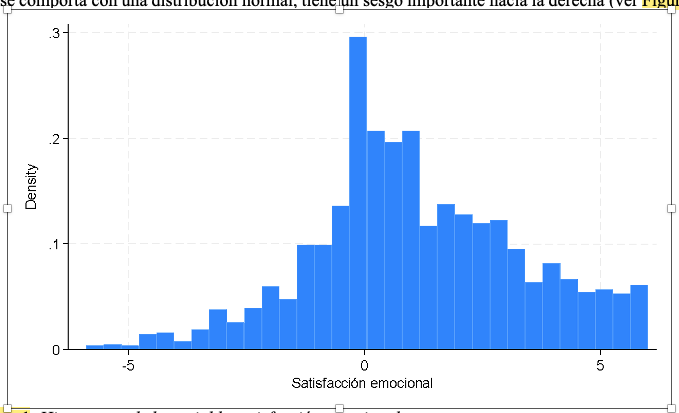
Figura 1: Histograma de la variable satisfacción emocional. Fuente: Elaboración propia.
Aunado a estos resultados, se encontró que el promedio de la variable satisfacción emocional es 1,1, con una desviación estándar de 2,24 puntos—se debe recordar que un promedio balanceado para esta variable debería ser de 0,0. En contraste, en el Reino Unido y en Corea del Sur, donde se aplicó la misma encuesta—en el mismo año—, los resultados indican un promedio más cercano a cero, que sería el resultado de una percepción balanceada sobre los trámites administrativos (Baekgaard et al., 2025). En un análisis comparativo, México comparte el mismo nivel de satisfacción emocional con Estados Unidos y Dinamarca, aunque en la República Mexicana las personas dedican una mayor cantidad de tiempo a trámites administrativos (ver Figura 2). Estos hallazgos sugieren que, en México, las personas tienden a sentir una satisfacción emocional positiva después de realizar trámites administrativos.
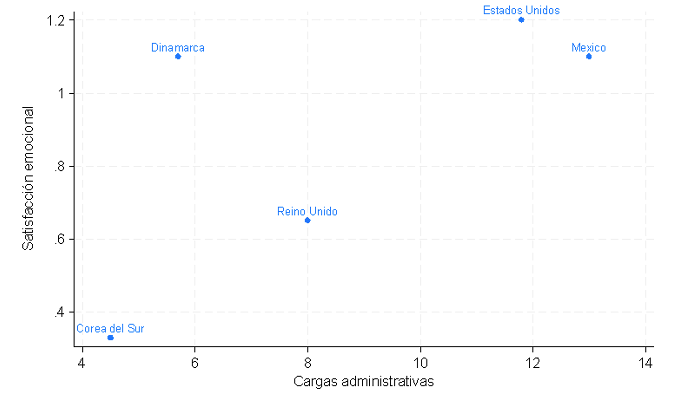
Figura 2: Comparación internacional sobre la relación entre cargas administrativas y satisfacción emocional. Fuente: Elaboración propia con base en datos presentados por Baekgaard et al., 2025.
Esto implica que las personas en México tienden a sentir una satisfacción emocional positiva después de realizar los trámites, a pesar de que comparativamente, es una labor más demandante que en otros países. De manera exploratoria, proponemos varias teorías para poder explicar este fenómeno. Primero, la teoría sobre expectativas e información (James, 2009; Morgeson, 2013; Poister y Thomas, 2011) propone que la satisfacción de los ciudadanos con un servicio público está influida por la desconfirmación de expectativas previas, las cuales pueden basarse en experiencias personales previas con el Estado o con burocracias públicas específicas (Kumlin, 2004), pero también en creencias más generales sobre el Estado o en información secundaria de expertos, medios de comunicación y conciudadanos (Baekgaard y Serritzlew, 2016; Van Ryzin, 2007). De acuerdo con esta teoría y con la observación de que México tiene altos niveles de cargas administrativas, se puede argumentar que la experiencia de cargas administrativas para mexicanos simplemente confirma en lugar de altera las expectativas que tienen sobre realizar tareas administrativas. Una normalización de cargas administrativas en interacciones burocráticas podría explicar la disonancia entre la experiencia objetiva (tiempo) y la experiencia subjetiva (emociones).
Otra posible explicación emerge de la literatura de bienestar subjetivo (Luhmann e Intelisano, 2018), donde se han investigado las disonancias en algunas sociedades entre el bienestar subjetivo y objetivo. La Figura 2 presenta, de manera sugerente, que existe una disonancia en México, Corea del Sur y Estados Unidos con respecto a las medidas objetiva (cargas administrativas—o minutos dedicados a trámites) y subjetiva (satisfacción emocional después del trámite). México y en Estados Unidos muestran mayor satisfacción emocional, a pesar de ser los países con más cargas administrativas, mientras que Corea del Sur muestra el nivel de satisfacción emocional más bajo, a pesar de tener el mejor desempeño en cargas administrativas. Una posible explicación que emerge de la literatura en bienestar subjetivo es la adaptación hedónica, que se refiere a la tendencia observada de los individuos a regresar a un nivel relativamente estable de felicidad a pesar de cambios significativos, ya sean positivos o negativos, en sus circunstancias. Este fenómeno sugiere que, si bien los aumentos en el bienestar objetivo, como el ingreso, pueden generar incrementos temporales en el bienestar subjetivo, las personas suelen volver a un nivel base de felicidad con el tiempo. Luhmann e Intelisano (2018) señalan que las personas tienden a ajustarse a nuevas circunstancias, lo que reduce el impacto a largo plazo de los cambios en el bienestar objetivo sobre el bienestar subjetivo.
Por fin, otro lente valioso para explicar este fenómeno es el de teoría de la comparación social, que plantea que las personas determinan su propio valor personal y social en función de cómo se comparan con los demás. Esto significa que el bienestar subjetivo no solo está influenciado por el nivel absoluto de bienestar objetivo, sino también por las comparaciones con sus pares; las comparaciones sociales ascendentes (compararse con aquellos que son percibidos como en mejor situación) pueden generar sentimientos de insuficiencia, mientras que las comparaciones descendentes (compararse con quienes están en peor situación) pueden mejorar el bienestar subjetivo (Suls y Wheeler, 2012).
Conclusiones
La presente investigación se inscribe en el campo del estudio de las cargas administrativas, contribuyendo específicamente al análisis de su impacto en la satisfacción emocional de los ciudadanos. Mientras que la literatura previa ha documentado los efectos de las cargas en el acceso a derechos y servicios públicos, este estudio se centra en la dimensión subjetiva de esta problemática, particularmente en el contexto mexicano. Al analizar datos de una encuesta representativa de 2022, se encontró que el tiempo invertido en trámites administrativos no tiene un efecto significativo en la satisfacción emocional de los ciudadanos. En cambio, ciertos indicadores de vulnerabilidad socioeconómica, como los ingresos bajos y la salud física y mental, sí juegan un papel en la percepción subjetiva de las tareas administrativas. Estos hallazgos amplían el conocimiento sobre la relación entre interacciones burocráticas y bienestar subjetivo, sugiriendo que las experiencias emocionales derivadas de las cargas administrativas están determinadas en mayor medida por factores estructurales y condiciones preexistentes de los individuos, más que por la carga burocrática en sí.
Los resultados plantean interrogantes importantes para futuras investigaciones. En primer lugar, la ausencia de una relación significativa entre tiempo invertido en trámites y bienestar subjetivo sugiere que la población mexicana podría haber normalizado las cargas administrativas como parte inherente de la interacción con el Estado, lo que podría explicarse mediante teorías como la adaptación hedónica, la teoría de la comparación social o el modelo de expectativa de información. Estas aproximaciones requieren ser exploradas en profundidad mediante estudios cualitativos que examinen las narrativas de los ciudadanos sobre su relación con la burocracia. Además, sería relevante analizar si esta desvinculación entre cargas objetivas y percepción emocional es específica del caso mexicano o si también se observa en otros contextos de América Latina. Los hallazgos también sugieren que el efecto de las cargas administrativas podría no ser uniforme en todos los sectores de la población, sino que estaría mediado por condiciones estructurales. Más específicamente, ciertos factores sociodemográficos, como los bajos ingresos y la salud, se asocian con una menor satisfacción, lo que puede indicar una mayor carga emocional inherente para las personas de esos grupos de población – es decir, independientemente si estas personas sufren más cargas administrativas. Si estos factores también funcionan como variables de moderación para la relación entre las cargas administrativas y su impacto en la satisfacción emocional es una pregunta que futuros estudios en el campo podrían poner a prueba.
Estudios futuros también podrían atender otras limitaciones de nuestro estudio. Como se señaló anteriormente, nuestra muestra no fue completamente representativa de la población mexicana. Además, nuestra medición de las cargas administrativas se basó únicamente en el tiempo dedicado a tareas administrativas. Estudios futuros podrían remediar estas limitaciones mediante la inclusión de muestras representativas y una medición multifacética de cargas administrativas. Finalmente, se reconoce la limitación de este estudio al presentar únicamente datos de un momento específico. Si bien los hallazgos indican que factores estructurales —es decir, la lenta evolución de las actitudes hacia el gobierno— explican los hallazgos, estudios futuros podrían explorar los cambios en la experiencia subjetiva de las cargas administrativas a lo largo del tiempo.
Desde una perspectiva política, la falta de una asociación clara entre cargas administrativas y respuestas emocionales negativas plantea un desafío para la movilización ciudadana en torno a esta problemática. En México, la ausencia de una demanda social clara para reducir las cargas administrativas sugiere que estas no han sido politizadas, es decir, no han ascendido como una cuestión relevancia pública y, por lo tanto, los funcionarios públicos no enfrentan costos políticos por mantener o incrementar barreras burocráticas. Esto es particularmente preocupante dado que la literatura ha demostrado que las cargas administrativas pueden utilizarse como una forma de exclusión política y social (Moynihan et al., 2016; Peeters, 2020). Esto, sin embargo, también debería ser motivo de preocupación para el gobierno. Si, en efecto, estos hallazgos apuntan hacia una normalización de las cargas administrativas, se asiste a una consecuencia aprendida de reiteradas insatisfacciones de ciudadanos en sus interacciones con el Estado. La escasa confianza de la gente en el gobierno y en su capacidad para garantizar el acceso a derechos y servicios básicos puede reproducirse en cada nuevo oneroso encuentro burocrático.
En consecuencia, una clave importante para mejorar la confianza en el gobierno y el acceso de las personas al Estado puede residir en hacer visibles las consecuencias de las cargas administrativas y, posteriormente, en reducirlas. En este contexto, resulta crucial que futuras investigaciones examinen los mecanismos a través de los cuales se podrían incorporar las cargas administrativas en la agenda política y en el discurso público. Asimismo, el diseño de políticas públicas orientadas a reducir cargas administrativas debería considerar no solo la eficiencia administrativa, sino también el impacto diferencial de estas barreras en poblaciones vulnerables. El hallazgo de que las vulnerabilidades socioeconómicas están asociadas con una menor satisfacción subjetiva lleva al argumento de que gobiernos deberían prestar especial atención a los grupos de población que podrían quedar “rezagados” en el acceso a servicios y beneficios.
Licencia
Derechos de autor 2026 María José Álvarez Romero, Ana Ireri Aranda Torres, Brenda Itzel Pablo Hernández, Sandra Elvira Reyes Hernández, Rik Peeters, César Rentería Marín

Esta obra está bajo una licencia internacional Creative Commons Atribución-NoComercial 4.0.
Los contenidos de la revista se distribuyen bajo la licencia Creative Commons Reconocimiento-NoComercial 4.0 Internacional (CC BY-NC-4.0), que permite a los usuarios copiar, usar, difundir, transmitir y exponer públicamente los contenidos, siempre y cuando se cite la autoría (https://creativecommons.org/licenses/by-nc/4.0).